
Care by Condition / DiabCare
A closer look at insulin-producing cells, immune biology, and a major frontier in regenerative medicine.
Discuss your careType 1 diabetes requires daily decisions about insulin, meals, activity, and glucose levels. Severe hypoglycemia and the effort of preventing it can affect confidence, sleep, work, and family life.
One of regenerative medicine’s most significant directions is the development of insulin-producing islet cells from stem cells. This is a specific cell-replacement strategy. It should not be confused with every treatment described as stem cell therapy. At Sure Health 360 Center for Regenerative Medicine and Cell Therapy, the consultation can help connect the science with your diagnosis and the exact options being considered.
Pancreatic islets contain several hormone-producing cell types. Beta cells release insulin in response to glucose and other signals. In type 1 diabetes, immune-mediated loss of beta-cell function creates an insulin deficiency. Replacing that function requires more than introducing undifferentiated cells: the cells must have the appropriate identity, respond to glucose, survive, and function in the recipient. [T1]
The immune system introduces another challenge. A transplanted preparation may face immune rejection, while the underlying autoimmune context also matters. Different research strategies address cell production, immune protection, and delivery in different ways. Their results cannot be combined into one generic claim that stem cells cure diabetes.
First, does the preparation contain functional insulin-producing cells? Second, can those cells survive and respond appropriately after transplantation? Third, can the person maintain useful function over time with an acceptable treatment burden?
C-peptide is helpful in research because it indicates endogenous insulin secretion. But detection of C-peptide, improved glucose control, freedom from severe hypoglycemia, and insulin independence are different endpoints. A convincing explanation should state which was measured and for how long.
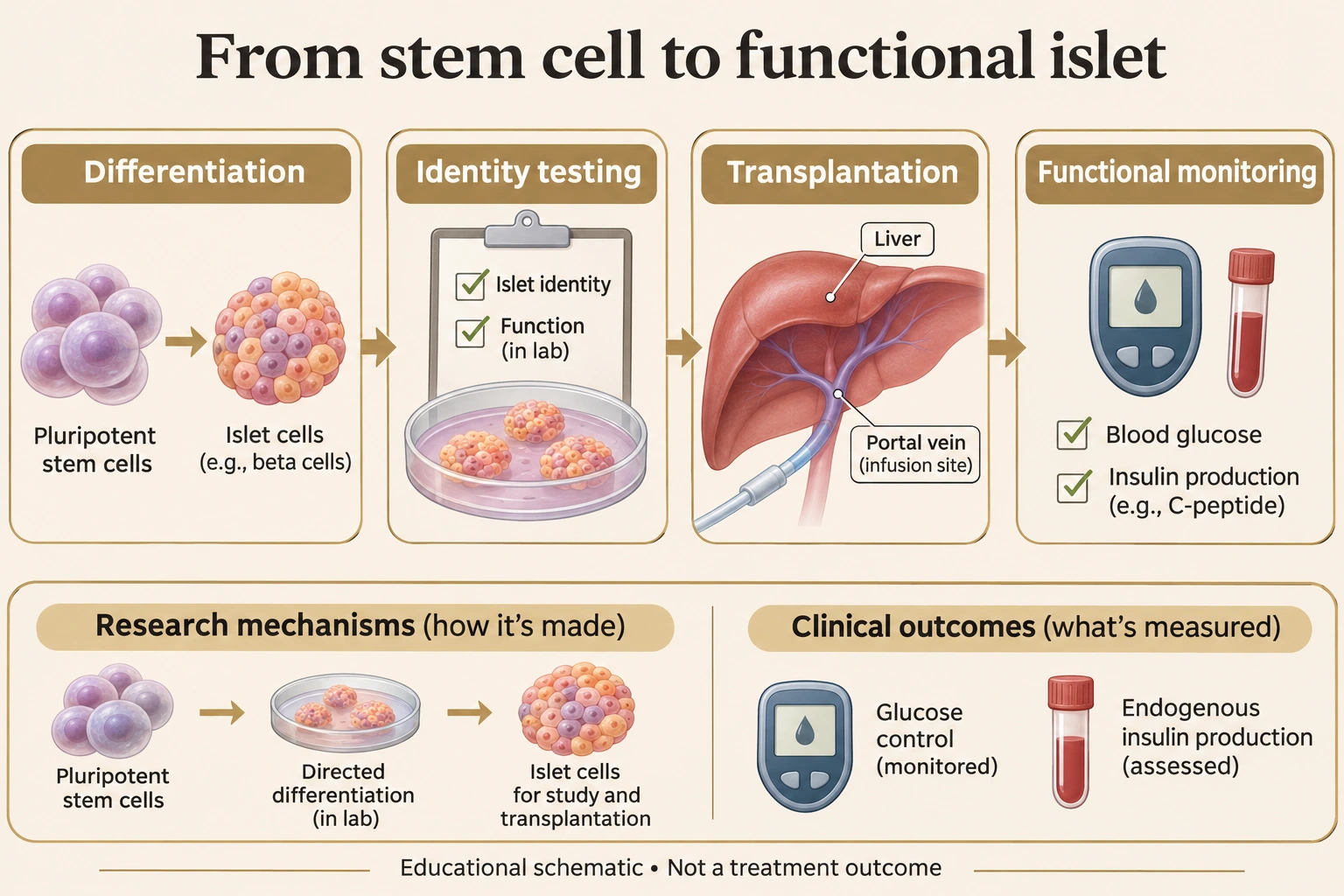
Stem-cell-derived islet research involves directed differentiation and specialized transplantation. It is not the same as infusing MSCs to create insulin-producing cells. The cited transplantation research also involved immunosuppression; this is not an implied clinic procedure.
In a 2025 phase 1–2 study, zimislecel, a stem-cell-derived islet preparation, was delivered into the portal vein with immunosuppressive treatment. Among 12 full-dose recipients with at least one year of follow-up, ten were insulin-independent at day 365. The findings are an important demonstration of functional cell replacement in a selected population. [T1]
The study was small, its reported analyses were interim, and the procedure included significant immune-management requirements. Serious adverse events and two deaths were reported. These details are part of interpreting the complete intervention, not reasons to overlook the scientific advance. The result does not apply automatically to MSC infusions or establish that zimislecel is offered at this clinic. [T1]
An MSC preparation is not a manufactured islet preparation. Its proposed purpose may concern immune signaling or support of an existing biological environment. A clinician discussing MSCs should therefore provide evidence for that intervention rather than borrowing insulin-independence results from specialized islet transplantation.
That distinction allows the promise of regenerative medicine to be presented accurately. It also helps a patient ask whether the option under discussion aims to replace lost insulin production, influence another process, or support management of a complication.
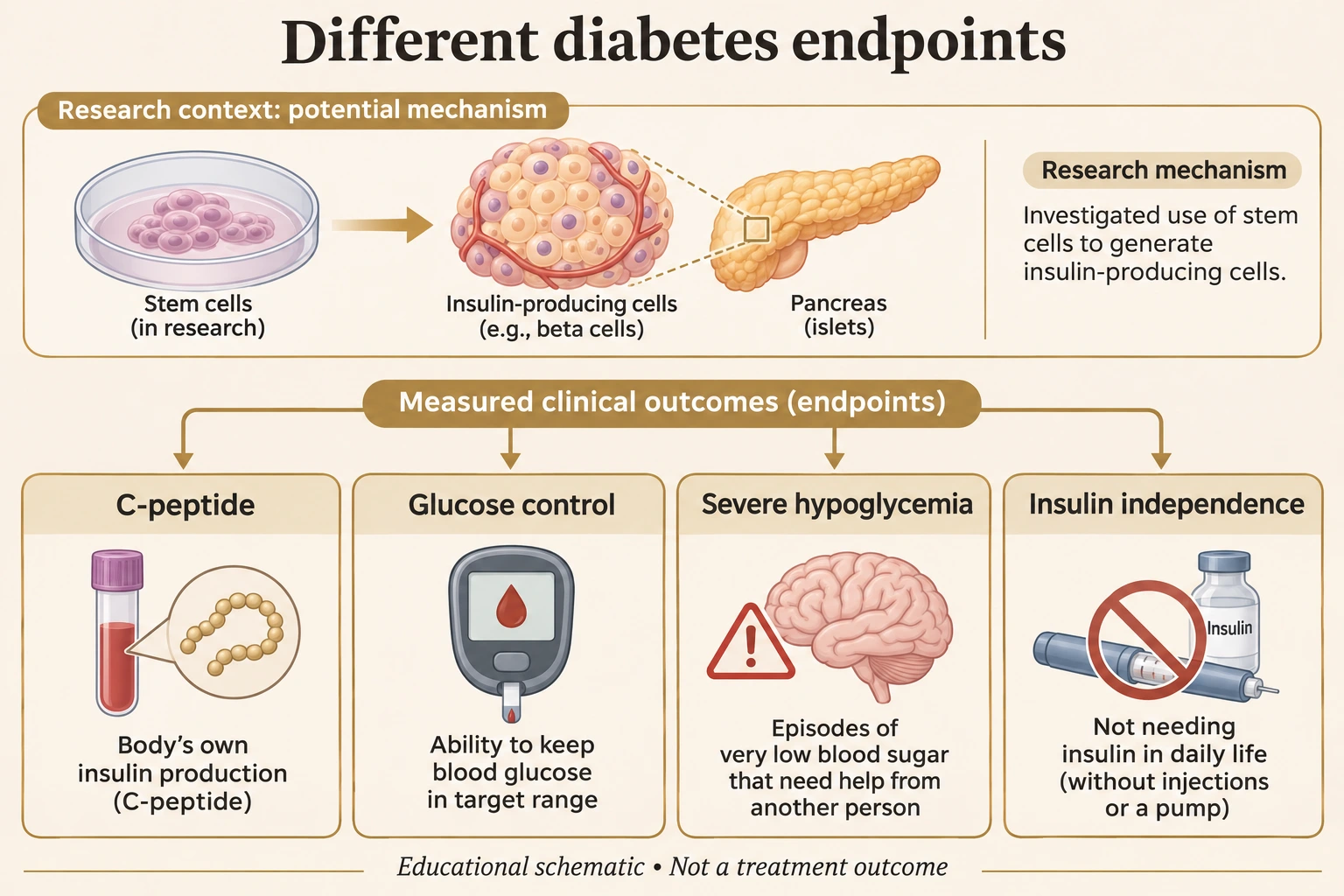
C-peptide, glucose control, severe hypoglycemia and insulin requirements measure different outcomes. They should be reported separately.
At Sure Health 360 Center for Regenerative Medicine and Cell Therapy, assessment considers the diagnosis, insulin treatment, glucose patterns, hypoglycemia history, kidney health, and other medical conditions. Existing insulin and monitoring remain essential unless the treating diabetes team directs a change.
The consultation should identify any proposed preparation, its intended purpose, supporting evidence, and practical requirements. Specialized transplantation or referral pathways must be distinguished from onsite services. A clear plan should also address alternatives and the follow-up needed to detect both benefit and harm.
Bring recent HbA1c results, continuous glucose monitoring reports if available, insulin doses, pump settings where relevant, and a history of severe hypoglycemia or ketoacidosis. Include kidney results, medication lists, and prior endocrine assessments. Do not stop insulin in anticipation of a regenerative consultation.
Useful goals include safer glucose management and reduced treatment burden, but each needs a defined measure. Follow-up may involve time in range, hypoglycemia, insulin use, and appropriate laboratory assessment. A change in insulin requirement can reflect many factors and should not be interpreted in isolation.
Is the treatment being discussed the same as the islet study? Ask for the product, route, and immune-management requirements. A similar label is not enough.
Does insulin independence mean a permanent cure? Duration, continuing medication, and long-term function all matter. One-year results cannot establish lifelong outcomes.
How do I start? Request an in-person consultation or teleconsultation. Appointments are confirmed by phone or email.