
Care by Condition / KidneyCare
Exploring kidney biology with long-term function and daily wellbeing in view.
Discuss your careChronic kidney disease can bring fatigue, complex medication routines, dietary decisions, and concern about the future. The diagnosis also covers very different circumstances, from early damage with preserved function to advanced disease requiring dialysis.
Regenerative research explores whether cellular activity can influence processes involved in kidney injury. At Sure Health 360 Center for Regenerative Medicine and Cell Therapy, the discussion begins with the cause and stage of disease, the pattern of kidney-function results, and the care already protecting your health. The aim is a specific treatment conversation, not a general promise attached to the word regeneration.
The nephron combines a filtering unit, the glomerulus, with tubules that adjust the composition of the filtrate. Surrounding small vessels and supporting tissue help sustain these functions. Damage to one compartment can affect the others. Protein leakage, vascular injury, tubular stress, and fibrotic change may coexist, but their importance varies with the diagnosis.
Estimated glomerular filtration rate, or eGFR, describes an aspect of filtration. Urine albumin describes a different aspect of injury. Neither result alone provides a complete account of the underlying process. A trend over time is usually more informative than a single number taken during dehydration, infection, or a medication change.
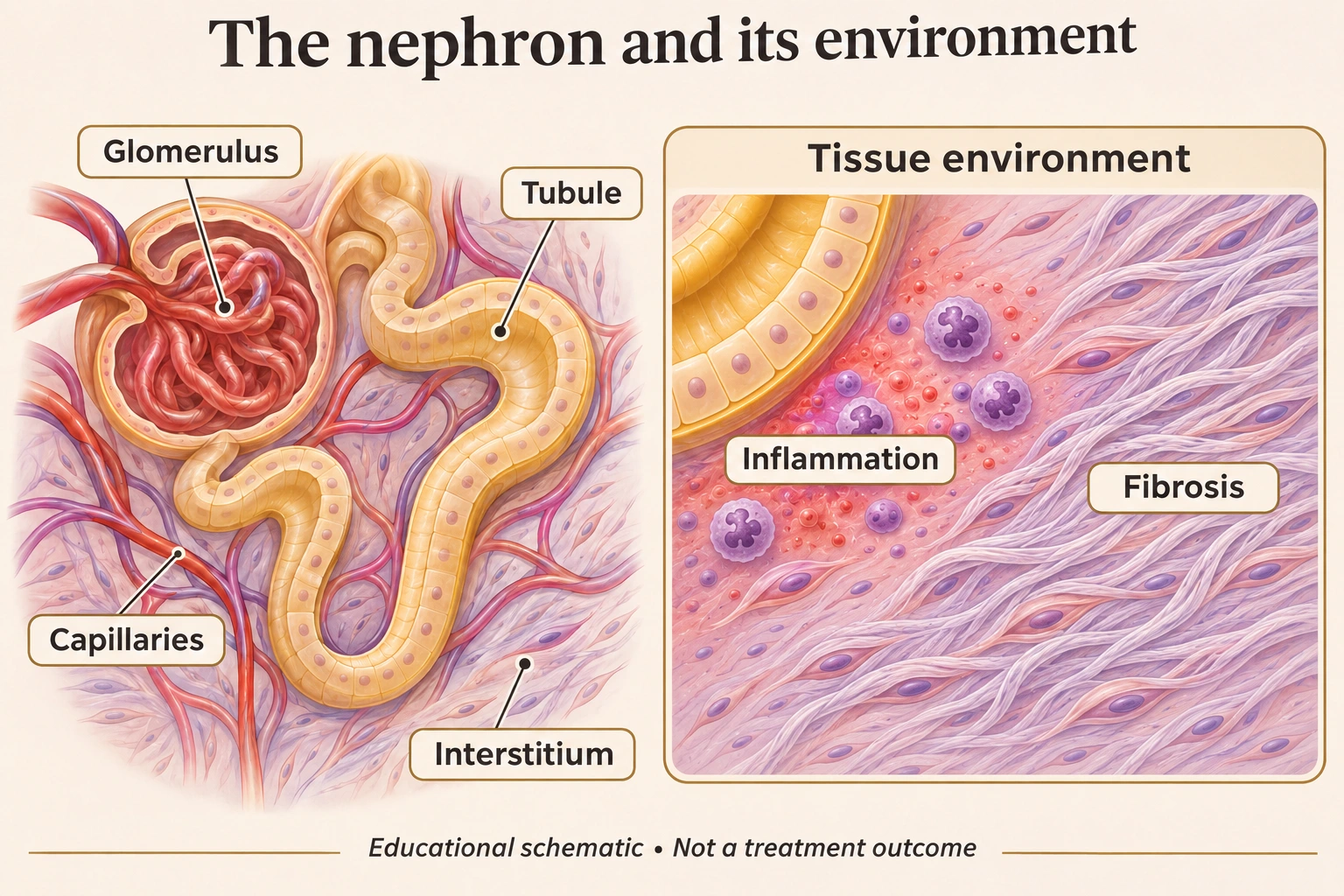
The nephron filters blood and modifies the filtrate through its tubules. Surrounding capillaries and interstitial tissue contribute to the kidney environment.
In diabetic kidney disease, metabolic and vascular stress can interact with inflammatory and fibrotic processes. MSC and mesenchymal precursor-cell research examines whether signaling from a defined preparation can influence that environment. The rationale concerns tissue support and immune interactions; it is not equivalent to growing a new kidney after an infusion. [CKD]
This distinction matters because restoring a laboratory marker, preserving existing function, preventing an event, and replacing an organ are very different outcomes. Each requires its own evidence. A study in diabetic nephropathy also cannot establish benefit for inherited cystic disease, immune-mediated glomerulonephritis, or every other cause of CKD.
A randomized placebo-controlled study enrolled 30 adults with diabetic nephropathy and tested a single infusion of a defined donor bone-marrow mesenchymal precursor-cell product. Safety was the main objective. Exploratory kidney-function findings suggested possible stabilization or improvement at 12 weeks, but the study was too small to establish a durable clinical benefit. [CKD]
Its value lies in a defined population and a measured human response that can inform larger studies. It does not demonstrate dialysis independence, avoidance of transplantation, or efficacy of all MSC preparations. Those are separate questions, and the study should not be used to imply answers it did not provide.
At Sure Health 360 Center for Regenerative Medicine and Cell Therapy, assessment considers the cause of kidney disease, eGFR and albuminuria trends, blood pressure, diabetes where relevant, anemia, fluid status, and current medications. Existing nephrology treatment remains central.
If a cellular approach is discussed, the physician should identify its proposed purpose and explain the evidence for someone at your stage of disease. Infusion volume, infection, medicines, and other organ conditions may affect planning. A person receiving dialysis should continue the prescribed schedule unless the treating nephrology team changes it.
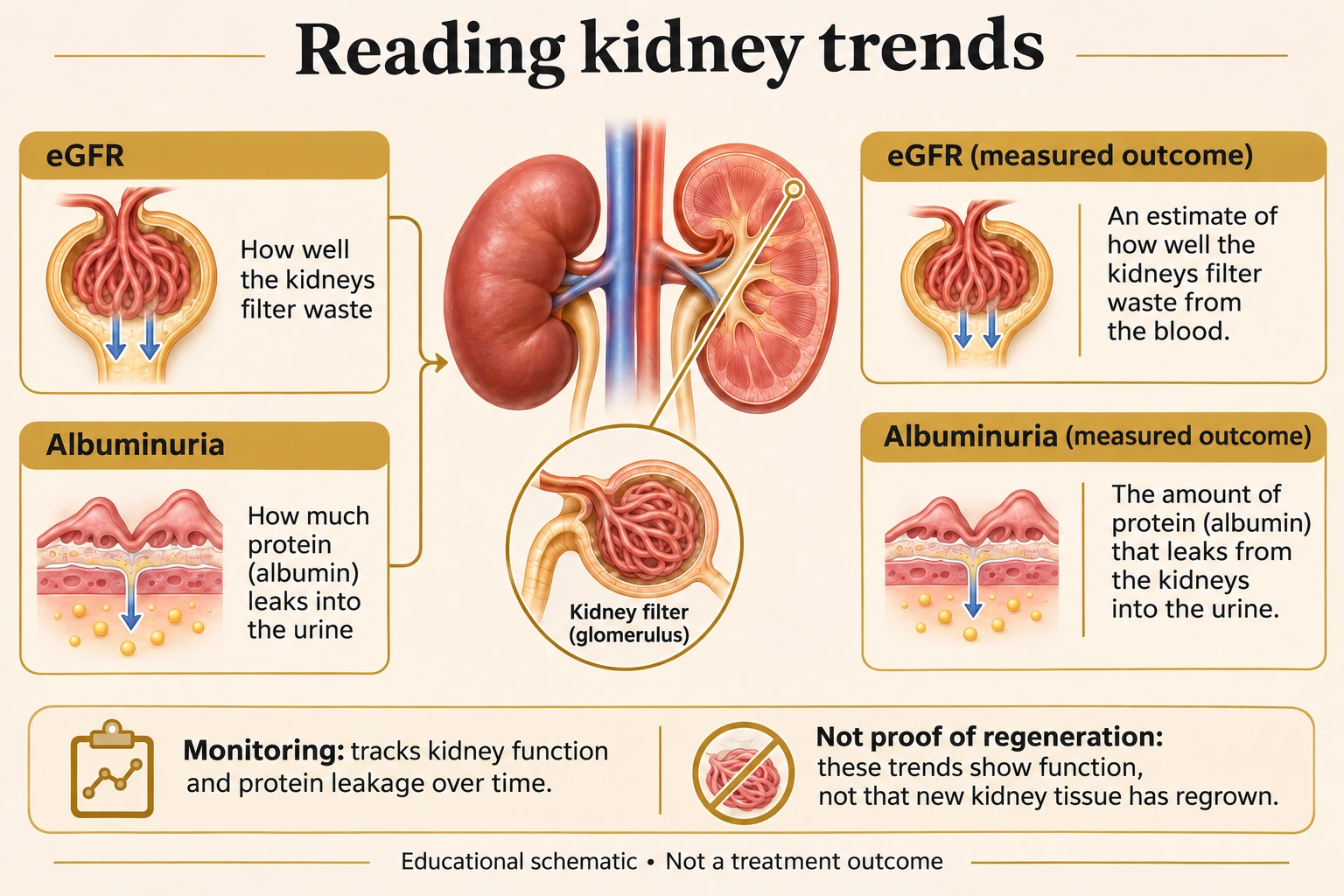
Estimated filtration and urine albumin provide complementary information about kidney health. Monitoring these measures does not by itself prove tissue regeneration.
Bring kidney-function results from several dates, urine protein or albumin results, relevant imaging or biopsy reports, medication and supplement lists, and nephrology notes. If receiving dialysis, bring the schedule and recent treatment information. Record swelling, breathlessness, appetite changes, fatigue, and recent admissions.
Follow-up should use comparable laboratory methods and record concurrent changes in medicines, blood pressure, glucose, and fluid status. A short-term rise in eGFR does not by itself prove new nephron formation. The plan should distinguish symptoms, biochemical changes, and sustained clinical outcomes.
Could treatment replace dialysis or a transplant? That has not been established by the cited trial. Discuss any proposed treatment within continuing nephrology care.
Does the same research apply to every kidney diagnosis? No. The cause and stage of disease determine which findings are relevant.
What would count as progress? Agree on a goal and observation period before treatment. The team can begin with a teleconsultation or an appointment in Davao City, confirmed by phone or email.