
Care by Condition / CardioRehab
Exploring the biology of a stronger daily life with heart failure.
Discuss your careHeart failure can turn familiar activities into demanding ones. Walking, climbing steps, sleeping comfortably, or keeping up with family life may become difficult. Its effects also reach the people helping with medicines, appointments, and daily support.
Regenerative medicine investigates how cellular activity might influence the biological environment of a failing heart. The interest extends beyond heart-muscle injury to inflammation, blood-vessel function, and the interaction between the heart and the rest of the body. These questions are especially important when symptoms continue despite established treatment.
At Sure Health 360 Center for Regenerative Medicine and Cell Therapy, your diagnosis and current treatment guide the conversation. A useful assessment begins by identifying the type of heart failure, its cause, and what remains difficult for you.
Heart failure with reduced ejection fraction involves impaired pumping function. Heart failure with preserved ejection fraction often involves abnormalities in relaxation, filling pressures, and systemic disease despite a preserved ejection-fraction measurement. Evidence from one group cannot automatically establish benefit in the other.
Coronary disease, cardiomyopathy, valve disease, rhythm disturbances, and other conditions can lead to different clinical pathways. Kidney function, iron status, blood pressure, diabetes, and physical conditioning also affect symptoms and treatment decisions. Understanding these relationships helps distinguish a potential biological target from a symptom that has another treatable cause.
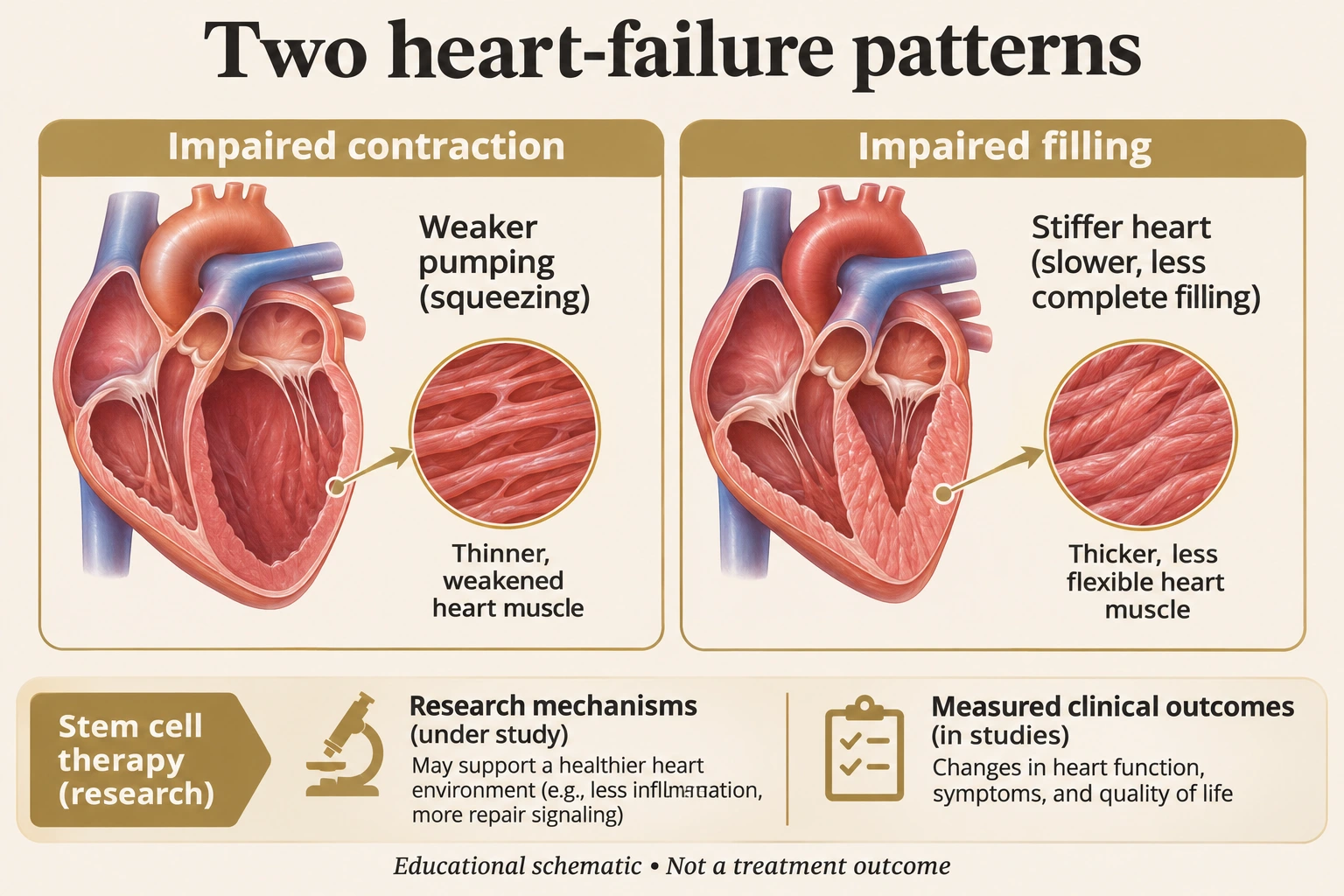
Heart failure can involve reduced contraction or impaired filling despite preserved ejection fraction. Both require a wider clinical assessment.
MSC and mesenchymal precursor-cell research explores signaling between administered cells and the host environment. Researchers investigate immune modulation and vascular effects as possible influences on cardiac performance. This does not mean the administered cells necessarily become a substantial population of functioning heart muscle.
For a scientific explanation to be clinically useful, it must connect mechanism with measurement. Changes in a biomarker may support a biological hypothesis. Improvements in exercise capacity or quality of life show a different kind of value. Fewer hospital admissions or deaths require their own evidence. These outcomes are related, but not interchangeable.
DREAM-HF randomized 565 patients with heart failure and reduced ejection fraction to transendocardial mesenchymal precursor-cell treatment or a sham procedure alongside standard care. The trial did not meet its primary endpoint involving recurrent decompensated heart failure or serious ventricular arrhythmia. [HF]
Exploratory analyses nevertheless reported potentially important signals involving myocardial infarction and stroke, with interest in patients showing systemic inflammation. These findings help refine research into which patients and biological pathways might respond. They do not establish a general reduction in heart-failure admissions or a survival benefit. A later subgroup publication draws on the same trial, rather than representing a separate confirmatory study. [HF2]
The procedure involved catheter-based delivery into heart tissue. It should not be presented as evidence that a different intravenous preparation produces the same result. This distinction allows us to explain promising science without obscuring what was actually studied.
For one patient, progress may mean walking farther without stopping. For another, it may mean fewer symptoms during self-care or better participation in family life. A baseline can include symptoms, functional class, walking capacity, echocardiography, laboratory measurements, and recent admissions.
Measurements need context. Fluid status can change weight and exercise tolerance quickly. A medication adjustment can improve symptoms independently of another intervention. Consistent follow-up helps distinguish sustained improvement from short-term fluctuation.
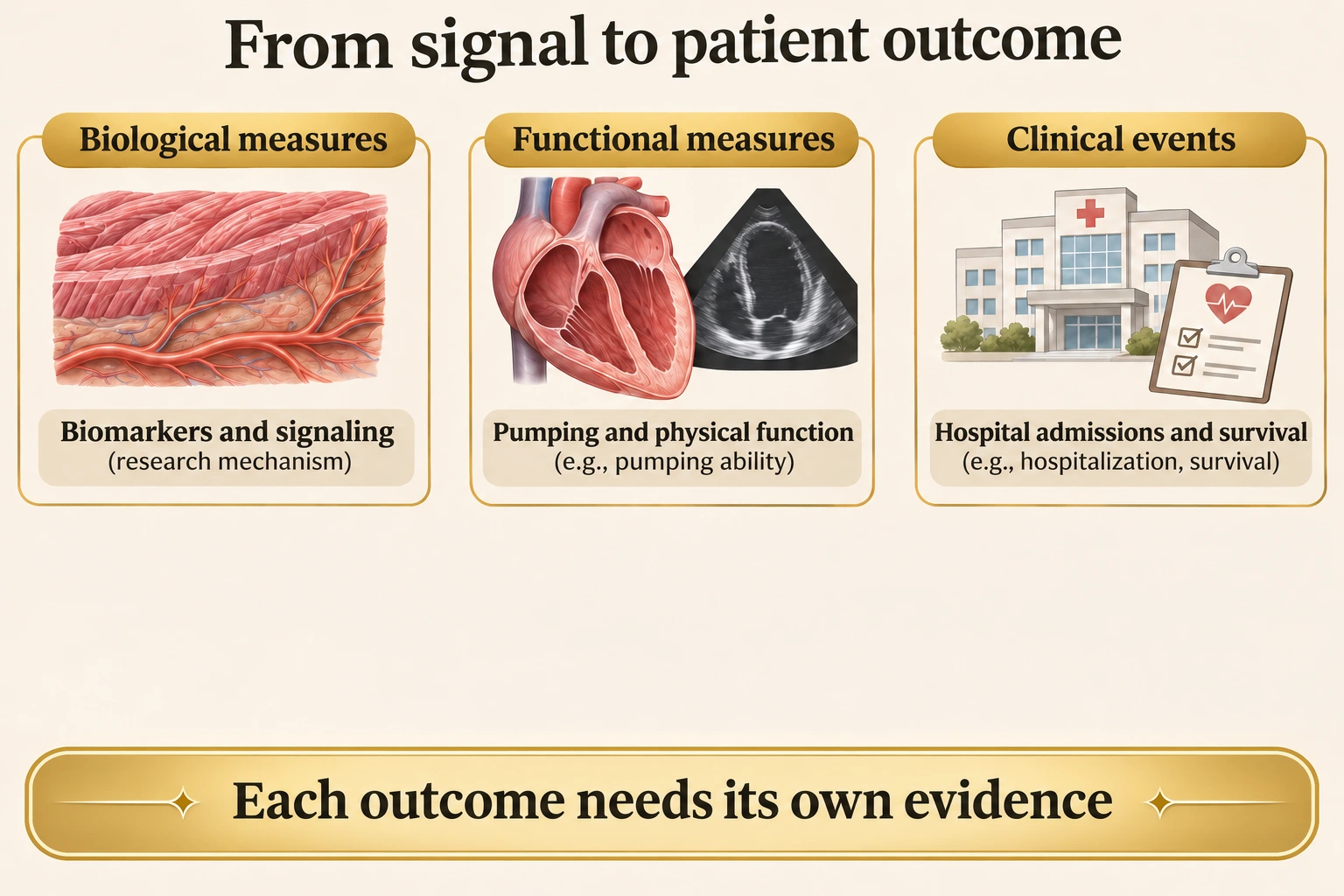
Biological activity, physical function and clinical events are distinct levels of evidence. Improvement at one level cannot automatically establish another.
Bring your latest echocardiogram, cardiology summary, laboratory results, medication list, device details if applicable, and a record of recent hospital admissions. Describe your usual activity level and any recent changes in swelling, breathing, or weight.
Assessment should consider whether established treatment has been optimized and whether another cause of symptoms requires attention. Any regenerative proposal should explain the product, delivery method, relevant evidence, potential complications, and alternatives. It should also specify who will monitor you and communicate with your cardiologist.
Do not stop heart-failure medicines or alter fluid and salt advice because you are considering a cellular treatment. A consultation can be face to face in Davao City or begin by teleconsultation, with confirmation by phone or email. Rapidly worsening breathlessness, fainting, or chest pain requires prompt medical care.
Does a trial in reduced ejection fraction apply to preserved ejection fraction? Not automatically. The patient group and mechanism must match the question being asked.
Can treatment replace my cardiac medicines or device? It should not be presented that way. These treatments address established needs and remain part of the clinical assessment.
What makes an assessment useful? A clear explanation of your heart-failure type, the evidence for the exact proposed intervention, and a measurable follow-up plan.