THE SCIENCE OF HOPE
Understand the biology. Explore the possibilities. Find a purposeful path toward care.
Stem cell therapy is the flagship clinical focus of Sure Health 360 Center for Regenerative Medicine and Cell Therapy. This library connects an accessible introduction with deeper scientific explanations and practical guidance, so patients, families and referring physicians can explore the field with substance.
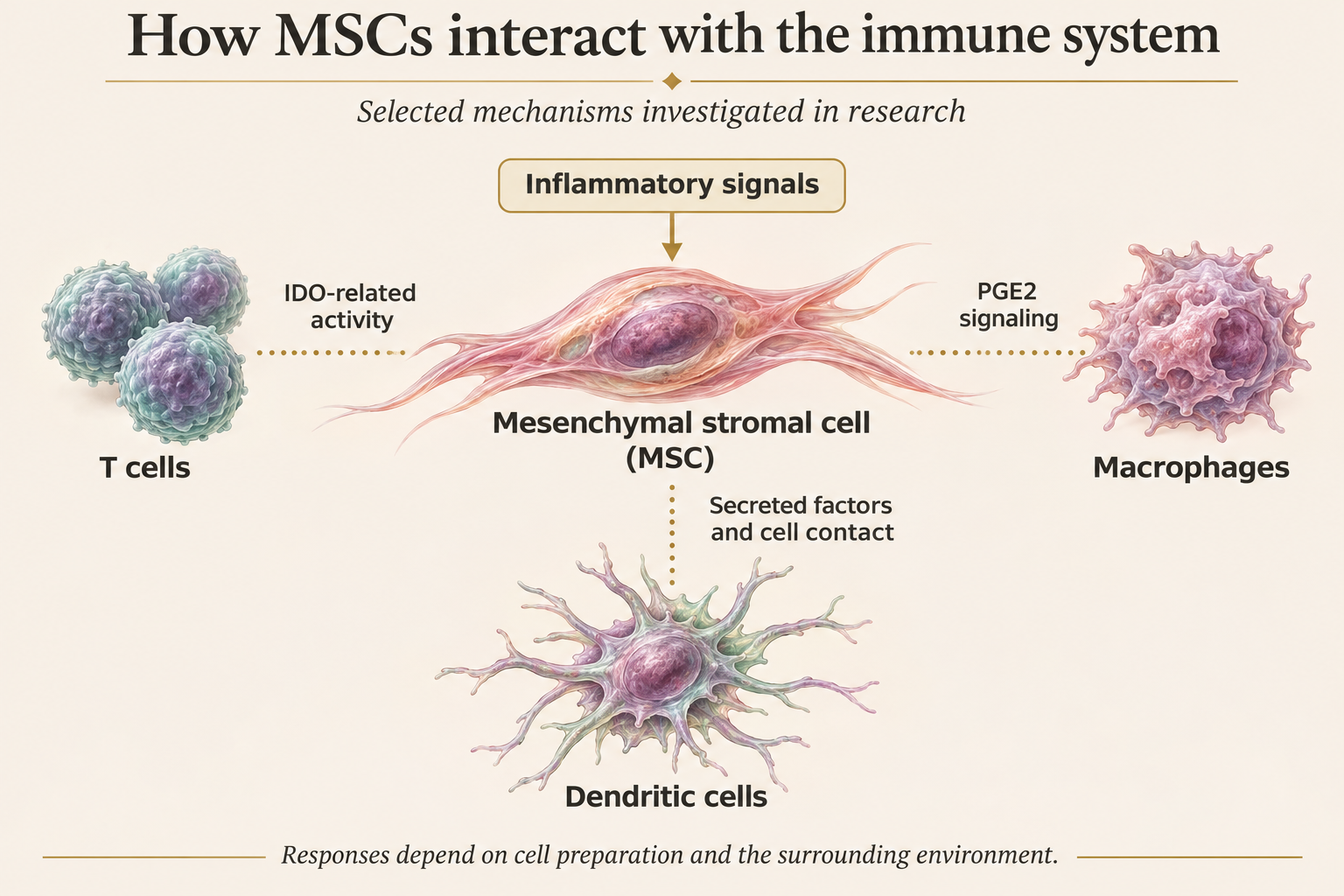 Mesenchymal Stem and Stromal Cells: The Science of MSC TherapyLiving cells can influence the biological conversation around injury and repair.
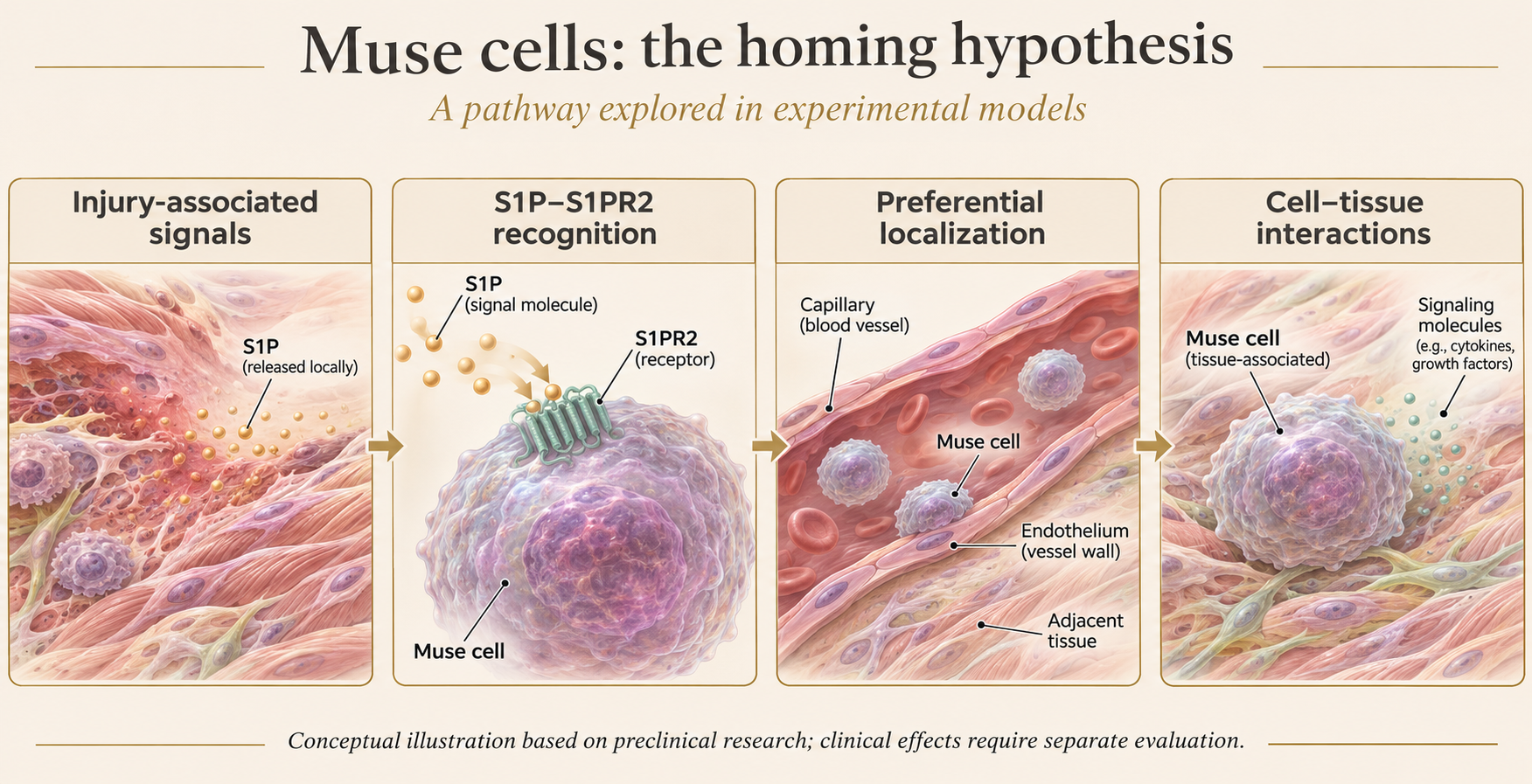 Muse Cells: From Distinctive Biology to Human ResearchA distinct stem-cell population is opening focused questions about tissue repair.
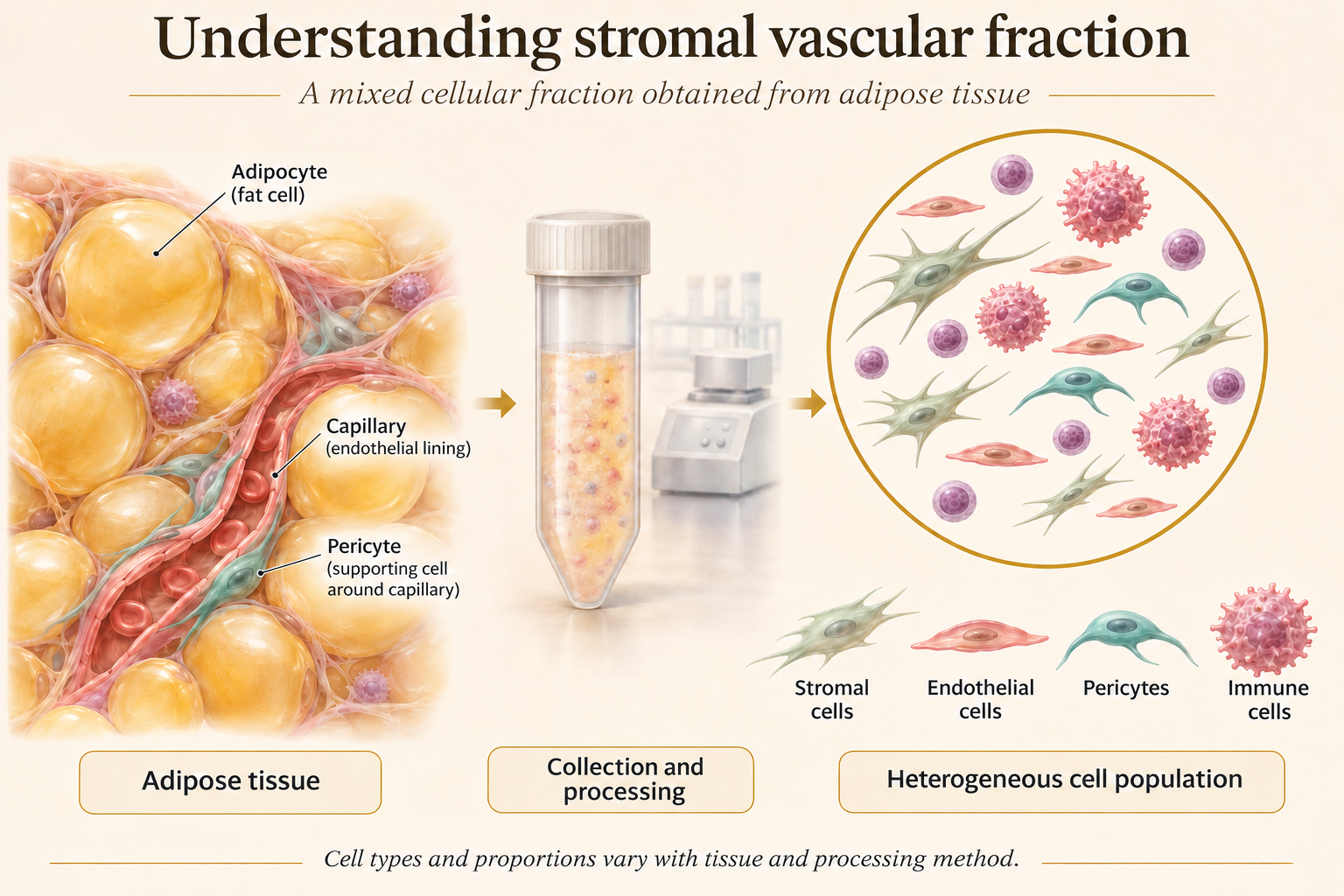 Stromal Vascular Fraction: The Biology and Clinical Context of SVFAdipose tissue contains a cellular community with regenerative research potential.
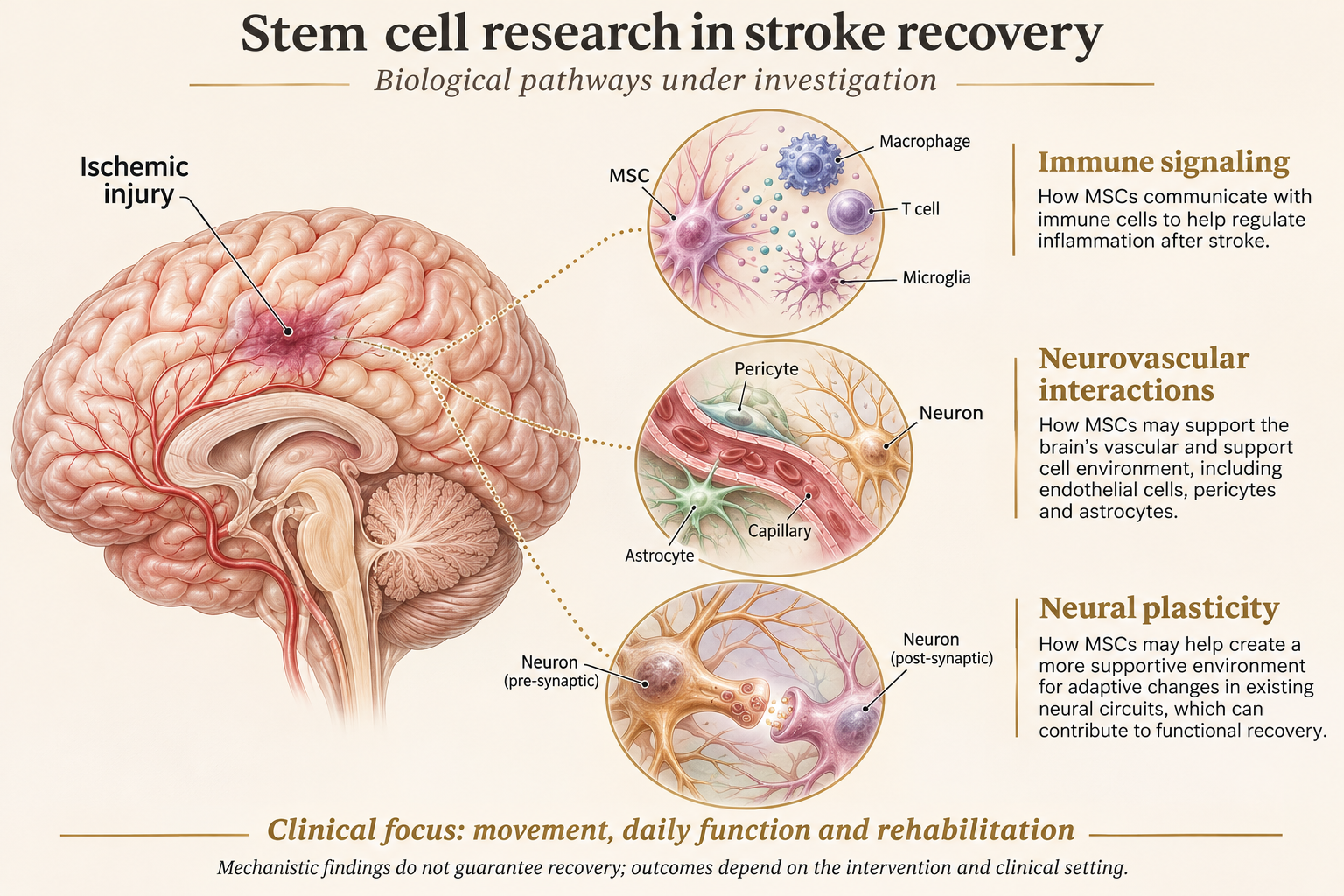 Stem Cell Therapy for Stroke RecoveryExplore the science of recovery, with independence and daily function at its centre.
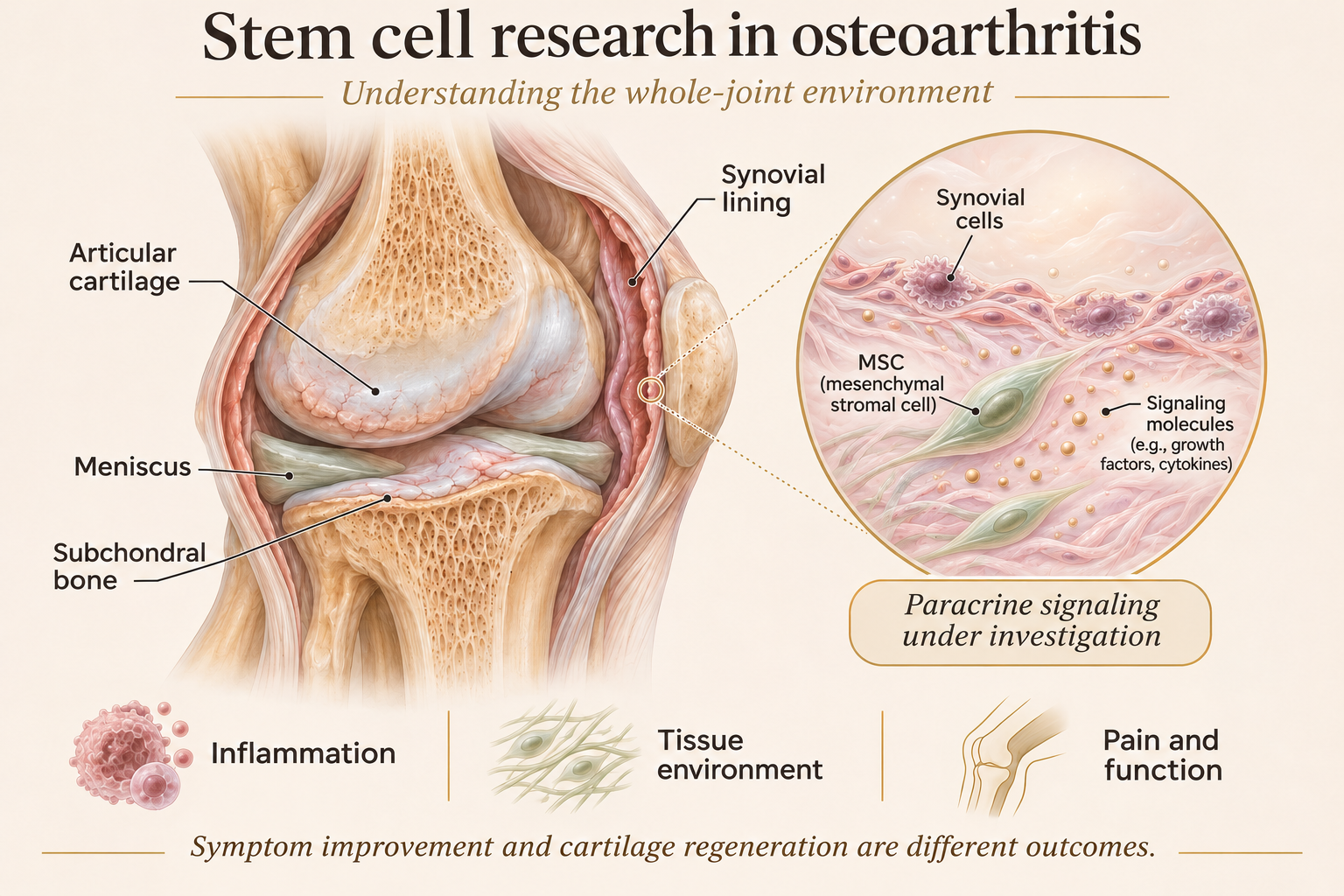 Stem Cell Therapy for OsteoarthritisThe scientific opportunity is better movement, grounded in the biology of the whole joint.
01 · Patient overview
Medicine can act on a receptor, replace a deficient hormone, remove diseased tissue or support a failing organ. Cellular medicine adds another possibility: using living cells and their biological activity to influence the environment in which injury, inflammation and repair unfold.
For patients, the significance is personal. A meaningful advance may be walking farther, participating more independently in daily life or returning to an activity that illness has made difficult. The purpose of this library is to connect the scientific opportunity with those real goals.
You can read each guide in three layers. Begin with the patient overview, explore the science in depth, then use the practical guide to prepare for a consultation. Scientific explanations remain visible. A page index lets you move directly to the level of detail you need.
02 · The science in depth
A stem cell can self-renew and produce more specialized descendants. Different stem-cell populations have different developmental capacities. Blood-forming stem cells, neural stem cells and mesenchymal stromal populations are not interchangeable biological materials.
The phrase stem cell therapy therefore describes a field rather than one uniform intervention. Within that field, MSC research focuses strongly on interactions with other cells and the local tissue environment. Precise naming helps explain which biology is relevant to a particular treatment discussion. The MSC guide develops this distinction in detail. ISCT position statement on MSC nomenclature
Regenerative medicine also includes approaches that are not living stem cells. Platelet-rich plasma is a blood-derived preparation; extracellular vesicles are membrane-bound particles released by cells; a secretome includes a broader collection of released substances. Keeping these categories clear makes the science easier to understand.
A mechanism explains how an intervention might act. A clinical endpoint asks whether the intervention helps a patient. Those are connected questions, but they require different kinds of evidence.
For example, an experiment may show a change in an inflammatory signal. A clinical trial must then determine whether a defined treatment improves pain, movement, independence or another outcome. Functional assays can help connect the biological activity of a preparation to its intended purpose, while controlled studies test the clinical result. Galipeau et al. (2016). ISCT perspective on immune functional potency assays. Cytotherapy.
This is why a strong scientific explanation follows a chain: identify the preparation, explain its proposed activity, examine human findings and consider the individual clinical setting. Each link makes the promise more specific.
The MSC guide explains cell identity, immune interactions and functional characterization. The Muse guide examines a distinct stress-enduring population and the progression from discovery to human research. The SVF guide explains a mixed adipose-derived preparation, including why collection and processing shape its composition.
Condition guides then ask a different question: what does this research mean for the biology and practical challenges of a specific diagnosis? Stroke recovery begins with neurological injury and function. Osteoarthritis begins with the whole joint, pain and mobility. This division gives each page a clear purpose and avoids repeating a general sales introduction.
The wider service directory remains the home of all 14 clinic services. The condition directory remains the route to all existing care pathways. These scientific guides deepen those pages rather than replace services or imply that every intervention is suitable for every condition.
An encouraging result becomes more useful when its context is visible. Our study summaries identify the preparation, participants, comparison treatment, follow-up and outcome. A small early study can identify an important signal; a larger controlled study can test whether that signal is reproducible.
In osteoarthritis, published trials include positive findings with particular MSC preparations as well as a large comparison trial that did not find an advantage over corticosteroid injection. That variation points toward better questions about preparation and patient selection. The osteoarthritis guide examines these findings together. Phase III trial of a bone marrow MSC product in knee osteoarthritis MILES trial comparing cellular preparations with corticosteroid injection
No single success percentage can summarize this entire field. The most informative evidence is specific enough to explain what was measured and whom the result may help. Sources are linked beside the relevant discussion and collected at the end of each page.
03 · Your practical guide
Sure Health 360 Center for Regenerative Medicine and Cell Therapy brings this field into a physician-led practice in Davao City, Philippines. Dr. Daryl Joel “Butch” Dumdum is a Fellow in Stem Cell and Regenerative Medicine and a Founding Fellow of the Philippine Society for Regenerative Medicine.
The clinical task is to connect scientific understanding with your history, diagnosis, current treatment and priorities. Research informs that discussion; the proposed preparation and plan must be explained in their own terms. Full professional background, team information and actual facilities are presented on Our Clinic.
Begin with the condition you want help with and the activities you hope to preserve or regain. Bring available reports, imaging, a medication list and a brief history of previous treatment. You do not need to choose a cell type before meeting the physician.
Face-to-face consultations and teleconsultations are available. Onsite care takes place at Sure Health 360 Center for Regenerative Medicine and Cell Therapy in Davao City. The team confirms appointments by phone or email and explains what to prepare.
The consultation should leave you with a clear understanding of the proposed option, the evidence relevant to you, alternatives, important treatment considerations and follow-up. That clarity gives hope a direction.
No. Begin with your condition and goals. The consultation helps identify which options deserve consideration and why.
Our Therapies remains the complete service directory. These guides provide deeper explanations of selected scientific and clinical topics.
Explore what this science could mean for you.
Bring your questions to Sure Health 360 Center for Regenerative Medicine and Cell Therapy. Consult in Davao City or begin with a teleconsultation. Appointments are confirmed by phone or email.
Request a consultationExplore all 14 services · Explore all care pathways · Meet your physician and clinic
The publications below report external research. They do not represent outcomes measured at our clinic.