
Care by Condition / PulmoCare
A scientific conversation about breathing, activity, and life beyond breathlessness.
Discuss your careCOPD can narrow everyday life. Walking outside, bathing, speaking while moving, or joining family activities may bring breathlessness and fatigue. Exacerbations can interrupt progress and create anxiety about the next episode.
Cellular research asks whether influencing inflammation and tissue responses could contribute to better respiratory health. It is an active scientific question, particularly because established lung damage can persist even after harmful exposures stop. A hopeful discussion begins with a precise understanding of which part of the disease an intervention is intended to address.
At Sure Health 360 Center for Regenerative Medicine and Cell Therapy, the first step is to understand your lung function, symptom burden, exacerbation history, and existing respiratory care. These details determine which questions about regenerative medicine are relevant to you.
COPD commonly combines small-airway disease with varying degrees of emphysema. Airway inflammation and remodeling restrict airflow, while emphysema damages the delicate structures involved in gas exchange and elastic recoil. The balance differs between patients.
Breathlessness can also reflect deconditioning, muscle loss, anemia, heart disease, or other factors. This is why an assessment should not reduce all symptoms to one scan finding. Spirometry, oxygenation, activity tolerance, and the wider medical picture each contribute useful information.
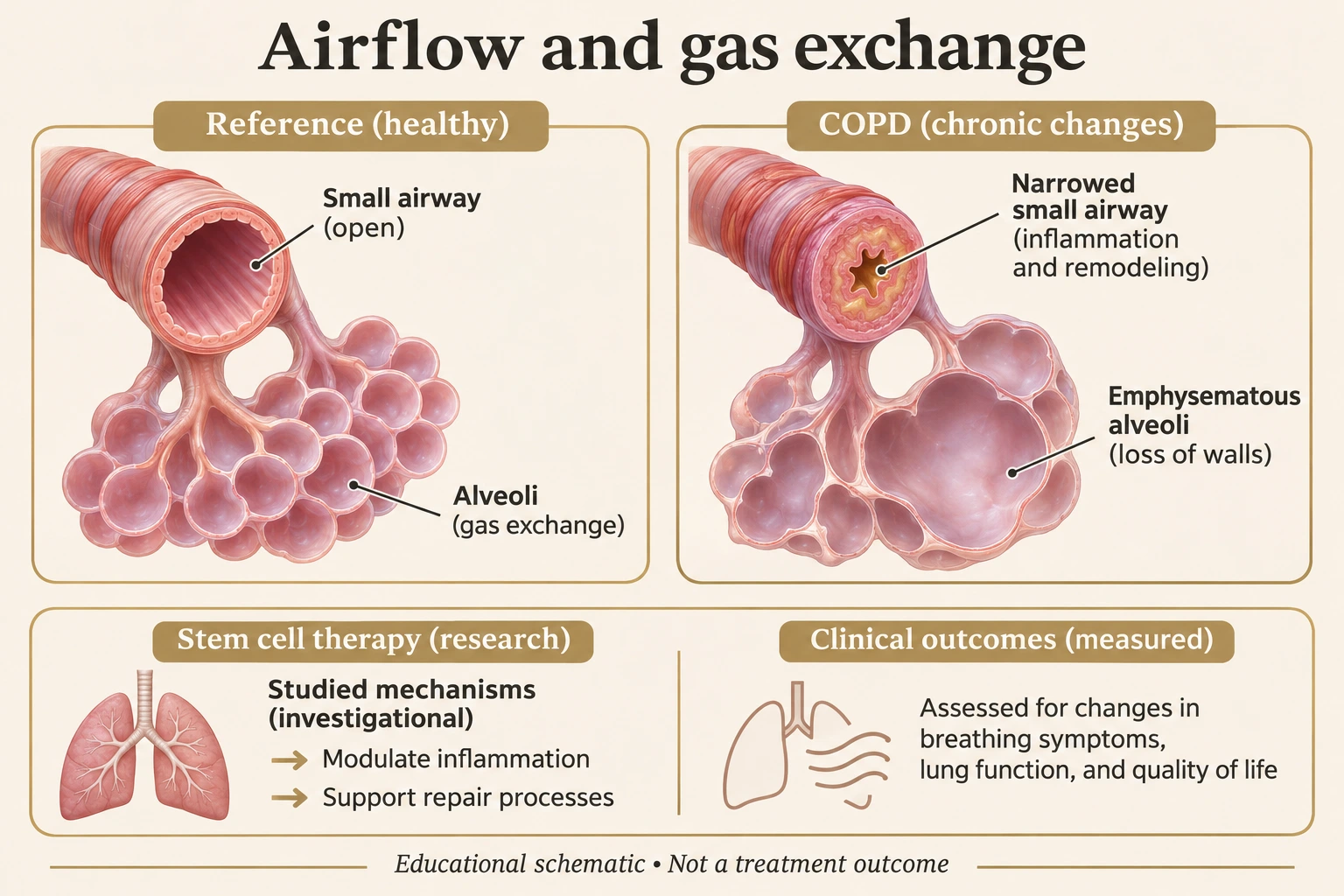
COPD can involve small-airway narrowing and emphysematous loss of alveolar structure. The balance varies between patients.
The scientific rationale for MSCs includes interactions with inflammatory cells and release of biological signals that may influence tissue responses. Researchers investigate whether these properties can modify aspects of the lung environment. Demonstrating such activity is different from showing that destroyed alveoli regrow or that oxygen requirements fall.
Cell source, preparation, route, and timing influence the question a trial can answer. Blood inflammatory markers provide one window into biology, while lung function and patient-reported symptoms provide others. An encouraging laboratory signal needs to be connected to a benefit a patient can experience.
A placebo-controlled trial enrolled 62 patients with moderate-to-severe COPD and tested four monthly intravenous infusions of an allogeneic MSC preparation. Treatment was generally well tolerated. Researchers observed an early reduction in C-reactive protein among patients with elevated baseline levels, providing a signal relevant to inflammation. The study did not demonstrate significant overall improvements in lung function or quality of life. [COPD]
This is a useful scientific foundation for asking more targeted questions about patient selection and product activity. It is not evidence that routine MSC treatment reverses emphysema. The clinical opportunity must be explained at that level of precision.
Useful goals may include tolerating a longer walk, recovering confidence after an exacerbation, or maintaining the ability to manage daily tasks. Some of these goals can be advanced through established respiratory care and rehabilitation, regardless of whether a regenerative intervention is appropriate.
A thorough review considers inhaler technique, exposure history, rehabilitation, nutrition, prescribed oxygen, and comorbidities. An additional intervention should have a clear purpose within that plan. Several therapies offered by a clinic should not automatically be combined simply because they are available.
In particular, hyperbaric oxygen is not equivalent to prescribed long-term oxygen for COPD. Lung anatomy and gas trapping can affect its suitability. It should not appear as an automatic COPD add-on or as a substitute for respiratory assessment.
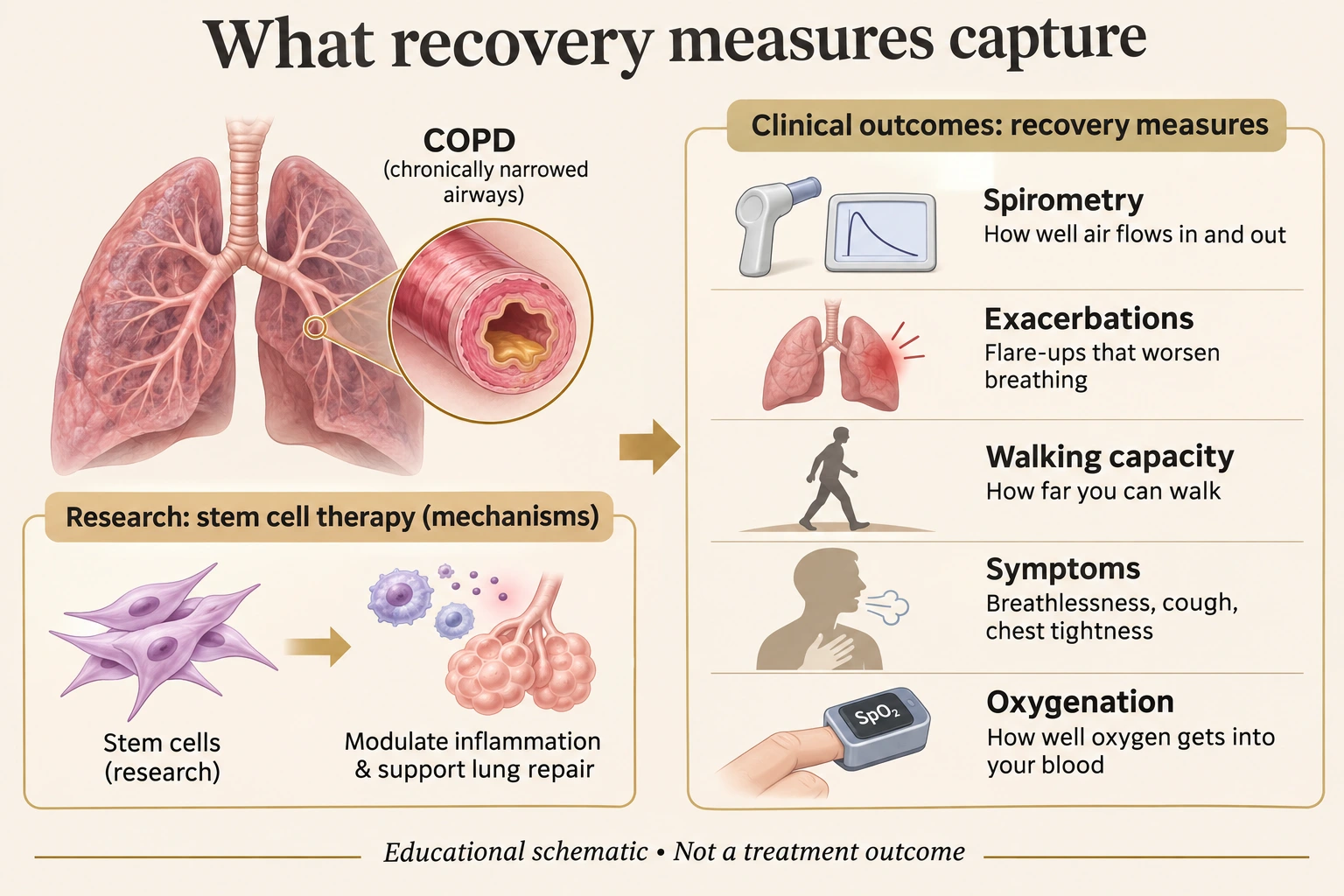
Spirometry, exacerbations, symptoms, walking capacity and oxygenation provide different information about respiratory health.
Bring your spirometry, chest imaging report, inhaler and medicine list, oxygen prescription if applicable, and details of recent exacerbations or hospital admissions. Explain how far you can usually walk, what causes you to stop, and whether your symptoms have recently changed.
The consultation should identify what is established in your diagnosis, what the proposed treatment is intended to influence, and how any change would be measured. Discuss infusion or procedure-specific risks in the context of your respiratory reserve and other illnesses. An outpatient inquiry is not a suitable route for a severe exacerbation or rapidly worsening breathing.
You may begin with a face-to-face consultation in Davao City or a teleconsultation. Appointments are confirmed by phone or email. Travel planning should take account of your oxygen needs and advice from your respiratory clinician.
Can stem cells rebuild my lungs? Current human evidence does not support that promise for COPD.
Why is the research still interesting? Inflammation and tissue-response pathways remain important scientific targets, even when an early trial has not shown overall functional benefit.
What is a productive next step? Review your respiratory status and goals, then examine whether a specific proposed option has a defensible role in your care.