
Care by Condition / NeuroRegen
Understanding emerging science while respecting the individual and supporting family life.
Discuss your careAutistic people have individual strengths, communication styles, preferences, and support needs. Families may seek help with participation, communication, sleep, or coexisting medical problems. A meaningful care discussion begins with specific concerns rather than a promise to make someone a different person.
At Sure Health 360 Center for Regenerative Medicine and Cell Therapy, consultation considers developmental history, current supports, general health, and the priorities of the individual and family. This guide explains why cellular approaches are being researched, what human studies have shown, and which questions should shape a decision.
Autism is a heterogeneous neurodevelopmental condition. There is no single injury site or single established inflammatory abnormality explaining every person’s experience. Research on immune signaling or neuroinflammation explores possible contributors in some individuals; it does not establish that autism as a whole is caused by inflammation. [ASD2]
A change in a laboratory marker does not automatically demonstrate an improvement in communication or participation. A credible study needs an appropriate comparison, defined outcomes, and enough follow-up to distinguish an intervention from development and changes in ongoing support.
Cord blood contains a mixture of blood-related cells. Cord-tissue MSCs are a different preparation, obtained and manufactured through a different process. Research involving one cannot prove benefit from the other. Cell-derived products such as extracellular vesicles are a further distinct category and are not living stem cells.
The MSC rationale concerns signaling and immune interactions. It does not demonstrate that infused cells replace a missing population of neurons or rewire an autistic person’s brain predictably. These distinctions help families understand what a proposed intervention actually involves.
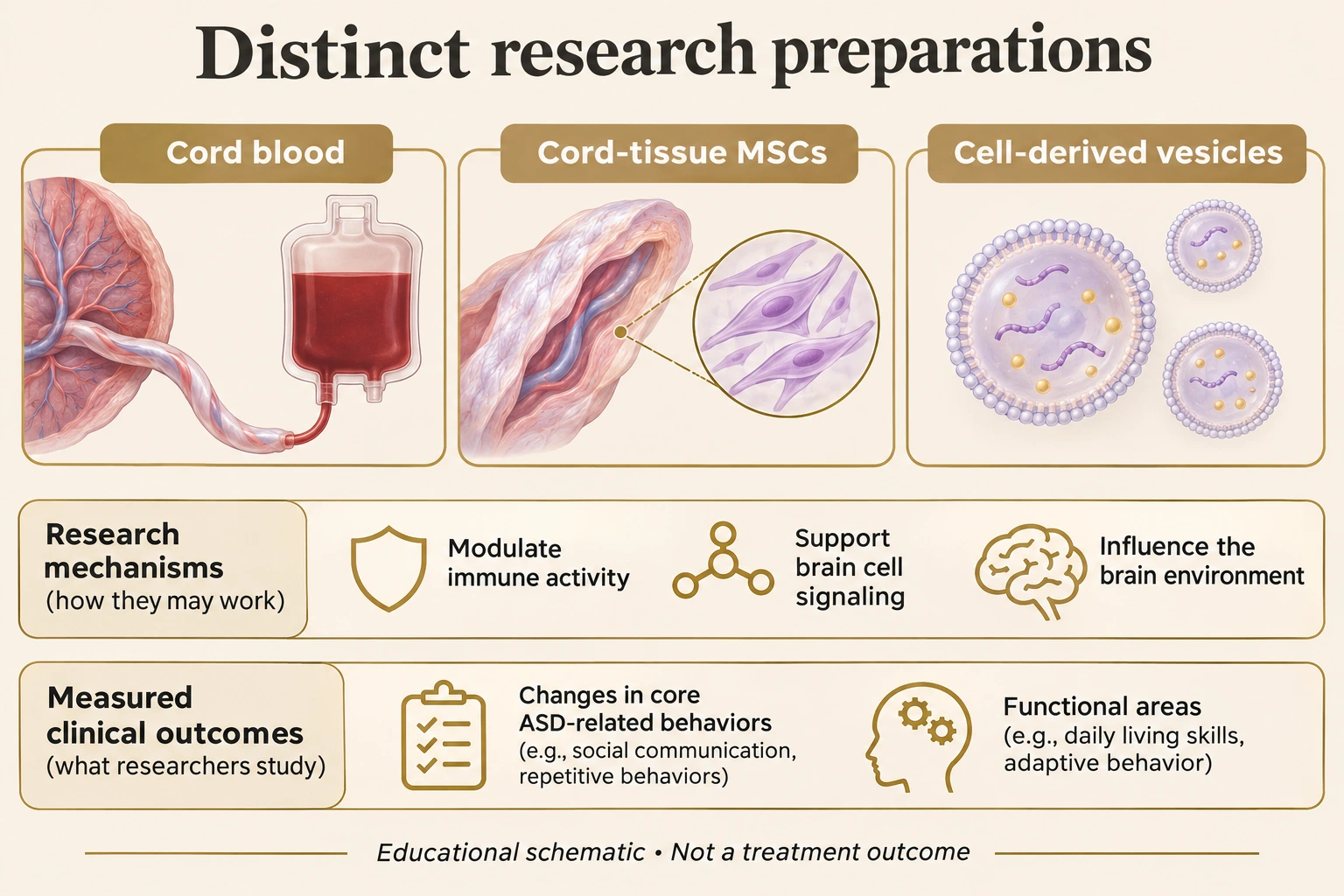
Cord blood, cord-tissue MSCs and extracellular vesicles are distinct preparations. Findings for one preparation do not establish the effects of another.
A 2020 randomized, blinded trial included 180 children and compared a single cord-blood infusion with placebo. In the overall population, it did not improve the primary socialization outcome or reduce autism symptoms. Exploratory findings in children without intellectual disability raised questions for further research, but did not change the overall primary result. [ASD1]
A separate phase I study administered cord-tissue MSCs to 12 children. Its open-label design primarily addressed early feasibility and safety. It can guide subsequent research, but cannot establish efficacy without a suitable comparison group. [ASD2]
These studies support a focused conversation about preparation, participant characteristics, and measurement. They do not establish stem-cell therapy as a proven treatment for autism. The scientific opportunity should be explained without turning preliminary or subgroup findings into a promise to families.
A consultation can help clarify which concerns are medical, which relate to communication or environmental support, and which need further assessment. Sleep problems, pain, gastrointestinal symptoms, epilepsy, or anxiety deserve appropriate attention in their own right. They should not be assumed to share one treatment.
If a cellular intervention is discussed, the family should receive an explanation of the preparation, evidence for the intended goal, procedural considerations, costs, alternatives, and follow-up. Continuing developmental, educational, communication, and medical supports remain part of care.
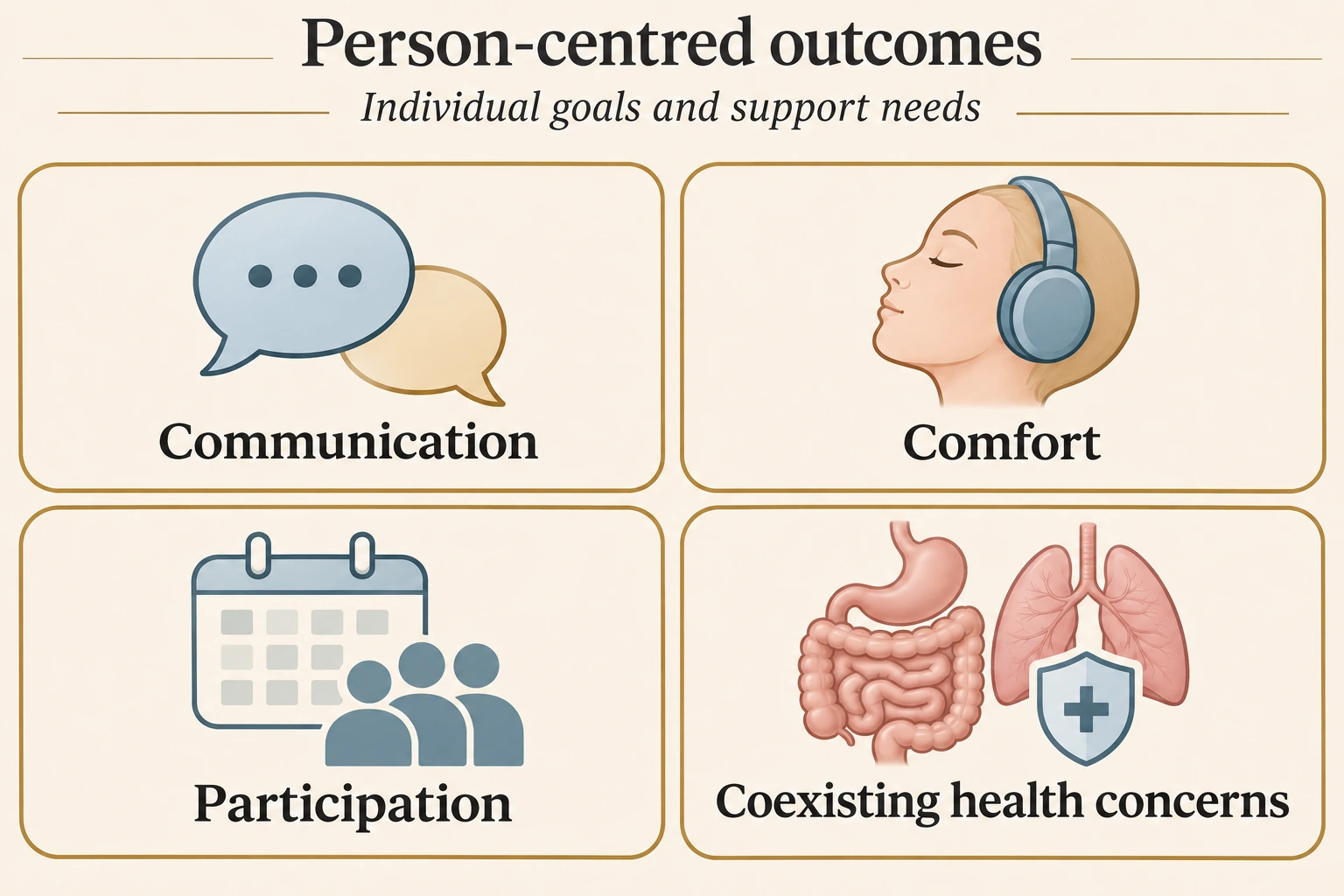
Meaningful assessment considers communication, comfort, participation and coexisting health concerns, with goals shaped around the individual.
Bring developmental and diagnostic reports, current medicines, relevant medical history, and information about existing therapies or school support. Explain communication preferences, sensory needs, and what makes an unfamiliar appointment easier. This helps plan a visit around the individual rather than expecting the individual to fit a fixed routine.
Choose goals that matter to the person. Examples include communicating a need, participating more comfortably in a routine, or addressing a coexisting health concern. Goals should not center on suppressing harmless autistic traits simply to appear less autistic.
Record a baseline and agree on how progress will be reviewed. Standardized measures, everyday observations, and changes in other support should be considered together. Maturation and additional therapy can influence outcomes, making uncontrolled before-and-after impressions difficult to interpret.
Is there evidence of a cure? No. These studies do not establish a cure or reliable benefit for the overall autistic population.
Can we discuss research without committing to treatment? Yes. Understanding the evidence and the individual’s health needs is a useful purpose for a consultation.
Can we begin remotely? A teleconsultation can help organize the history and questions. The team confirms appointments by phone or email and can discuss an in-person visit.