THE SCIENCE OF HOPE
Complex diagnoses call for a deeper clinical conversation. At Sure Health 360 Center for Regenerative Medicine and Cell Therapy, we assess your medical history, current care, and priorities to explore the role cellular medicine may have in your treatment plan. Each option is considered in the context of the specific cell type, the evidence for your condition, and the outcomes that matter to you.
BIOSCIENCE BEFORE BIOLOGICS
Regenerative medicine explores how cells and the signals they release may contribute to new approaches to care. Bringing that science into a clinical conversation means looking closely at the biology of your condition, the evidence behind a particular approach and the goals that matter to you. Scientific understanding gives hope a thoughtful direction.
UNDERSTANDING THE SCIENCE
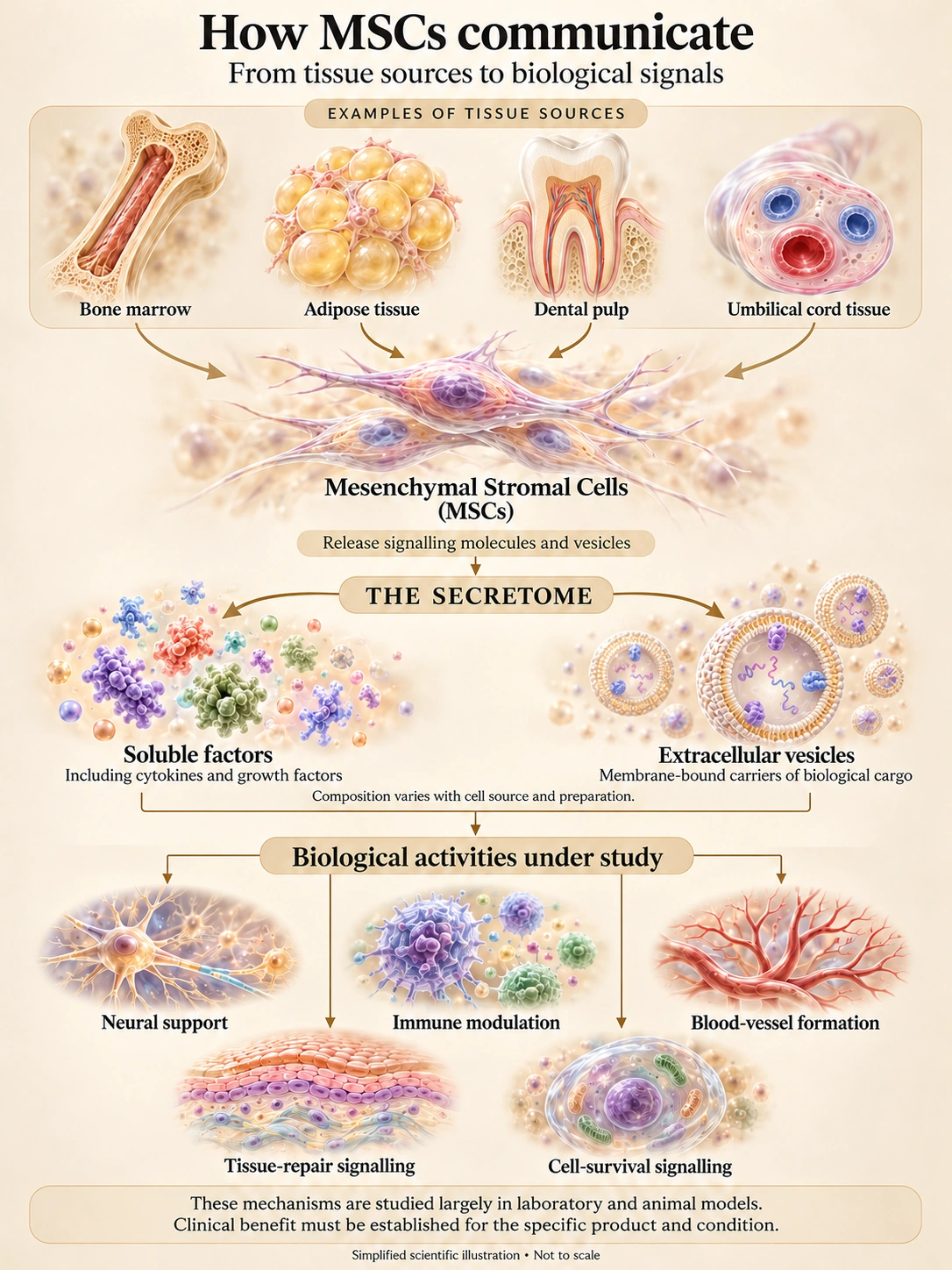
Mesenchymal stromal cells, or MSCs, are tissue-supporting cells studied for the signals they release and their interactions with the immune system. These properties are helping researchers explore new approaches to care. Understanding the cell source, the specific preparation and the evidence for your condition brings that scientific promise into a meaningful clinical conversation.
The science behind the signals. The possibilities ahead.
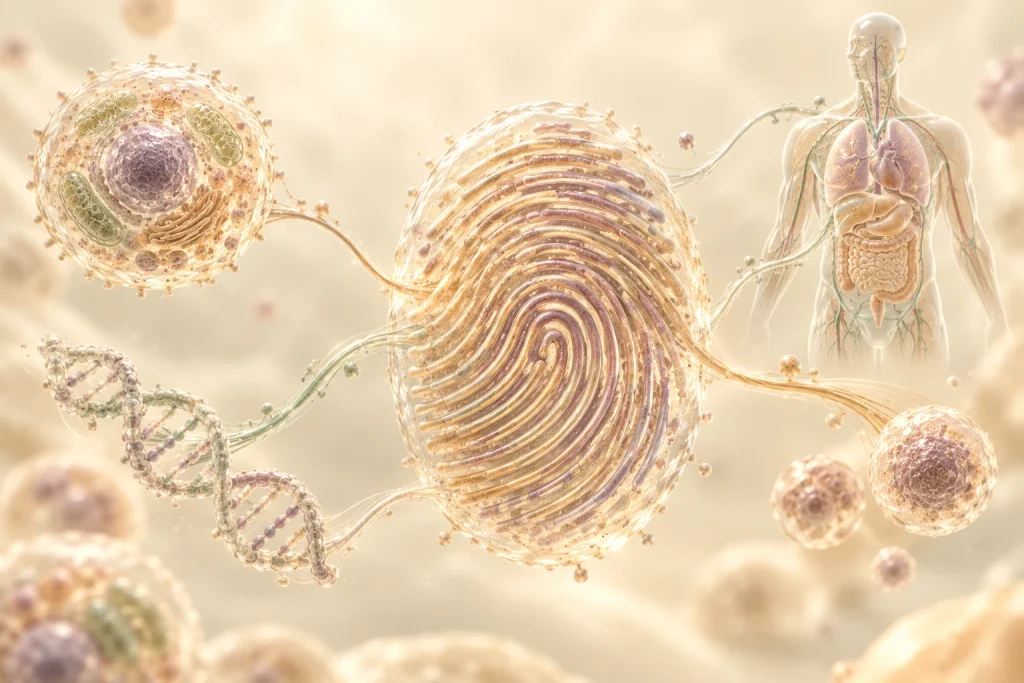
MSCs, secretomes and exosomes are connected through cell communication, but they are biologically different. Understanding that difference helps connect promising science to the right clinical question.
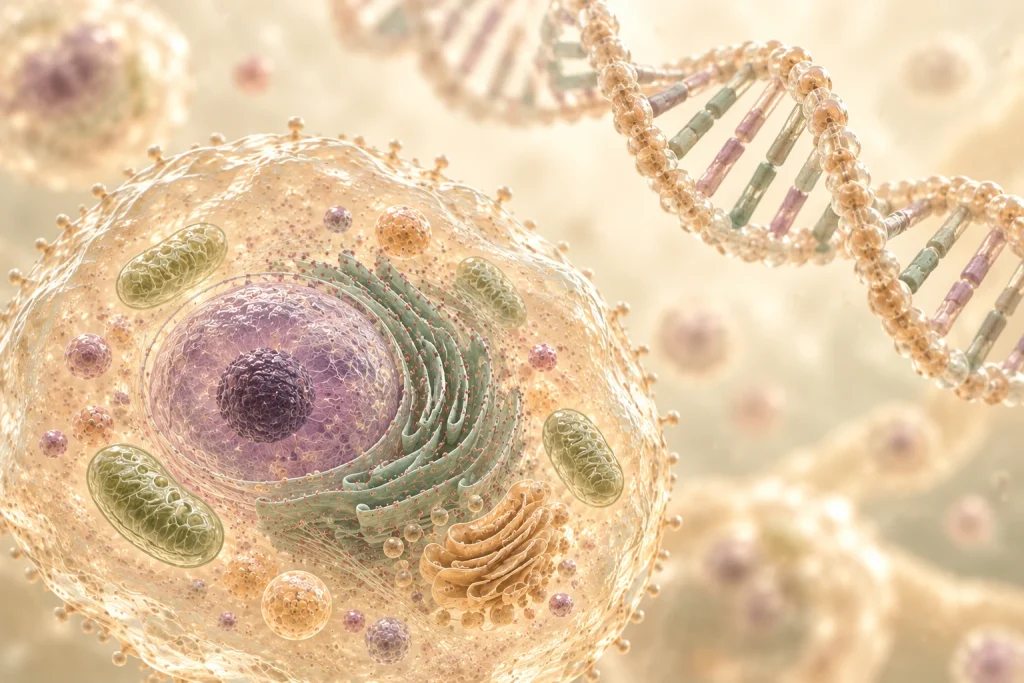
MSCs: the living cells
Mesenchymal stromal cells are living cells isolated from tissues such as bone marrow, fat and umbilical-cord tissue. They interact with their surroundings and release biological signals. Their tissue source and preparation matter; MSC populations are not all equivalent. ISCT position statement, 2019.
Secretome: the substances cells release
The secretome is the broader mixture released by cells, including soluble factors such as cytokines and growth factors, and extracellular vesicles. Secretome-based preparations use these released substances rather than the living cells themselves. Their composition depends on the source and processing method. Kehl et al., 2019.
Exosomes: one specific type of vesicle
Exosomes are membrane-bound particles formed within a cell’s endosomal system. They can carry proteins, lipids and RNA involved in cell communication. They are neither living stem cells nor the whole secretome. Not every extracellular vesicle is an exosome; that name requires evidence of its origin. MISEV2023 guidance, published 2024
Different approaches. Condition-specific decisions.
For patients exploring stem cell, secretome and exosome-based therapies at Sure Health 360 Center for Regenerative Medicine and Cell Therapy, these distinctions matter. Each proposed application needs its own clinical rationale and supporting evidence for the particular condition, preparation and delivery route. Evidence or approval for one does not automatically apply to another.The clinical conversation should connect your goals with the available research, potential benefits, safety considerations and alternatives, including whether the proposed use is investigational.
Science of Hope begins with understanding which approach may be appropriate for you, and why.
THE SURE HEALTH 360 DIFFERENCE
Choosing a clinic for stem cell and regenerative care is an important decision. You deserve more than familiarity with the terminology. You deserve a physician who can explain the biology, examine the evidence and connect both to your individual situation.At Sure Health 360 Center for Regenerative Medicine and Cell Therapy, our philosophy is Bioscience Before Biologics. Led by Dr. Daryl Joel Dumdum, our focus is a deeper clinical conversation about the science, the person seeking care and the reasoning behind the options being considered.